North County Collaborative for Mental Health
North County Collaborative for Mental Health
“The long-term opportunity is to create a North County where families don’t have to be expert system navigators in order to get their child help—that service organizations should know how to find one another, and the systems should do more of that work for the family.”
— Annya Shapiro, Executive Director of YouthPoint Health, the lead agency for the North County Collaborative for Mental Health
Life’s toughest challenges do not exist in isolation. And neither do the solutions.
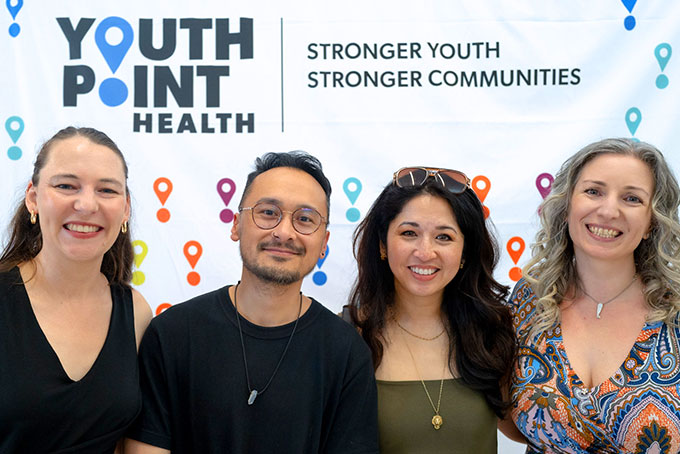
This idea is central to the innovative work of the North County Collaborative for Mental Health (NCCMH), a partnership between YouthPoint Health (YPH), Daly City Partnership, and Asian American Recovery Services.
“The collaborative’s motto is that young people don’t experience their lives in silos, so we can’t serve them in silos,” says Annya Shapiro, Executive Director of YPH, the lead agency for the nonprofit collaborative. “Young people do better when adults, organizations, schools, and systems around them are connected. And we’ve found that we’re a lot stronger working together.”
 With multi-year funding through Sand Hill Foundation’s Wellness Partnership initiative, NCCMH works to integrate and expand access to mental health support for young people across North San Mateo County, one of the most underserved regions of the county, and Silicon Valley as a whole.
As Annya explains, the partnership arose out of a different way of thinking about how nonprofits serve their community, pivoting from a mindset of “What can my organization provide?” to asking “What does the community need, and how can we collectively respond to the needs of our community?”
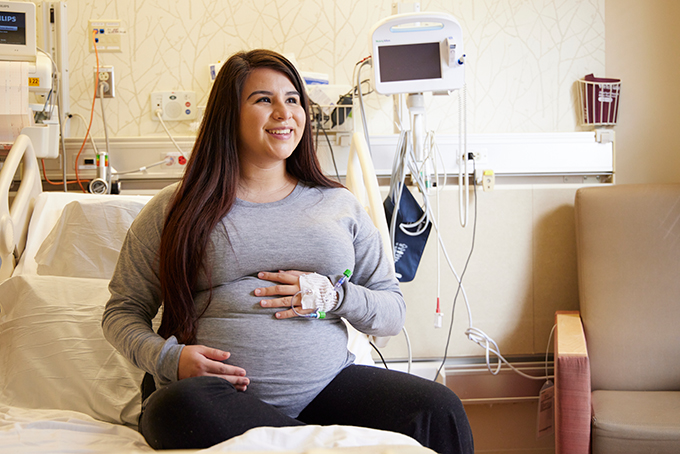
The young people and families that NCCMH serves are highly diverse, and many are navigating multiple systems at once—from school, healthcare, and behavioral health to public benefits, the immigration system, and more. Many families are also simultaneously navigating language and cultural barriers, along with the common challenges of housing pressure and economic instability.
“What we hear repeatedly is that families don’t need another disconnected resource—they need support that is accessible, trusted, culturally responsive, and easier to navigate,” Annya shares. “The long-term opportunity is to create a North County where families don’t have to be expert system navigators in order to get their child help—that service organizations should know how to find one another, and the systems should do more of that work for the family.”
NCCMH’s collective approach to building a holistic service ecosystem that meets young people and families where they are not only requires a different mindset from nonprofits—it takes special understanding and investment from funders.
“Sand Hill Foundation has been one of our longest supporters, and they understand that meaningful collaboration takes time and infrastructure.” Annya shares. “It’s one thing to find funding for a specific program but it’s not so easy to secure funding for the relationship building, the coordination, the trust, and shared planning that allows organizations to work differently together. Sand Hill Foundation’s investment in us gave us the opportunity to do that deeper work, and we’ve been able to have greater and more impactful reach within our collective community, especially when it comes to accessing and supporting youth who would otherwise likely fall through the cracks.”
The funder’s role doesn’t need to stop at core programming either. As Annya shares, the collaborative has been strengthened through additional investment in the wellbeing and relationships of the people doing the work—the nonprofit staff members who are often the first to prescribe wellness activities to others, but the last to engage in it themselves.
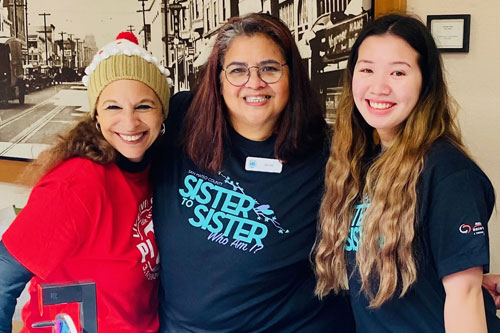
“Sand Hill surprised us by giving us this pot of wellness funds specifically targeted at getting our staff together and supporting them through an activity that takes care of them,” Annya shares. “Every year we do something fun together; we break bread, and this is where the real meaningful relationships occur. And now the kind of collaboration we see is completely different. People constantly think of one another when it’s time to connect their community members with resources—we can just message each other and it happens, because we have that infrastructure built.”
As Annya reflects on the impact of Sand Hill Foundation’s 10+ year investment, she shares a message for fellow funders: “I would like for them to know we need them to invest for the long term and to fund the infrastructure that makes collaboration possible. Communities don’t transform on a one-year grant cycle. The opportunity that we see now is that we’ve already built something that is often the hardest thing to create: the trusted relationships across our organizations. Now we can deepen those relationships and bring youth and family voices more directly into the structure and build something that can last far beyond one single grant.”
The collaborative’s next effort aims to accomplish exactly that: putting the young people of North County at the center of not just service but the design-making and outreach process itself.
“One milestone that I’m particularly excited about is building a strong youth advisory group, across the partner organizations, that gives young people a meaningful, compensated role in shaping priorities,” Annya says. “They’re going to be the ambassadors of spreading the word, ambassadors of mental health, and helping us to increase access across our community. That is really an important evolution—from organizations collaborating on behalf of young people to creating structures where young people themselves guide the collaboration.”
 Sand Hill Foundation’s longstanding support, totaling over $20 million, has played a vital role in ensuring that the hospital remains a leader in pediatric care and research, benefiting children and families throughout the Bay Area and far beyond. Under Susan Ford Dorsey’s leadership, the foundation has endowed both the hospital’s Surgeon-in-Chief and Obstetrician-in-Chief, as well as provided two major capital gifts. The first was for surgical suites in the Main building which opened in 2017 and the second is for the forthcoming transformation of the Atrium Garden in the main entrance. This serene space will offer a peaceful environment for families and children, promoting healing and well-being in nature.
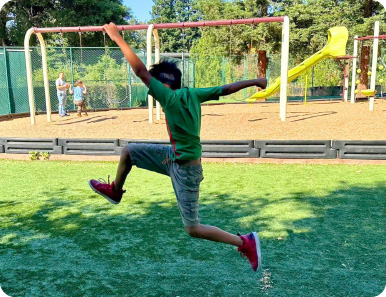 Children’s Health Council was founded in 1953, based on the vision of pediatrician Dr. Esther B. Clark, to establish a place where children and families in San Mateo and Santa Clara Counties could access therapy services from caring experts, regardless of cost. Since its founding, the organization has served over one million children, teens, and young adults across the Peninsula and throughout the greater San Francisco Bay Area.
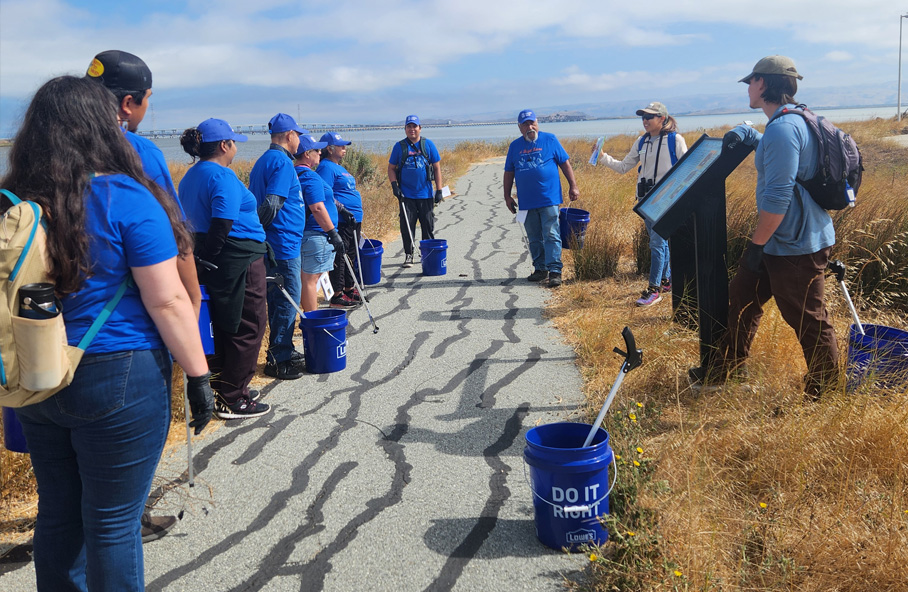 Nuestra Casa received a multi-year grant in 2023 from Sand Hill Foundation to expand their environmentally-focused work from East Palo Alto into North Fair Oaks. The initial phase of the project involved understanding the magnitude of different environmental issues facing the community. That data was then used to create a community education program that included an annual Environmental Justice Academy. This multi-week course covers climate justice; water justice, including where local water is sourced from; air pollution, including what is in the air locally; and sea level rise and flooding mitigation practices and adaptation policies.
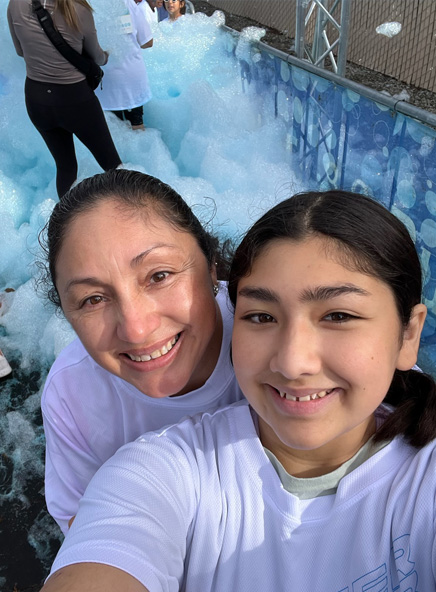 While the legal system is a bedrock of American democracy, the right to representation by a lawyer is limited to serious criminal matters. In California, this right is not guaranteed in many life-changing circumstances, from education and family conflicts to workers’ rights and housing disputes. In some instances, those with access to and knowledge of the legal system may prevail regardless of the facts of the case. This is where Legal Aid SMC evens the playing field by providing free legal education, training, and advice to low-income communities, as well as litigating on behalf of those communities when necessary.
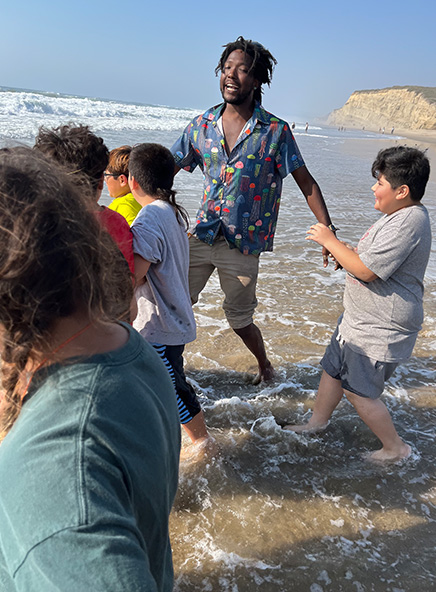 Since 2001, Vida Verde has been nurturing Bay Area elementary and middle school students’ academic performance, social and emotional learning, and connection to the outdoors by providing free, overnight environmental learning experiences for students who don’t otherwise get the opportunity. Each class trip is a carefully crafted explosion of activities and experiences at the nature wonderland of Vida Verde, a 23 acre coastal farm, and nearby state parks and beaches on the San Mateo County Coastside.
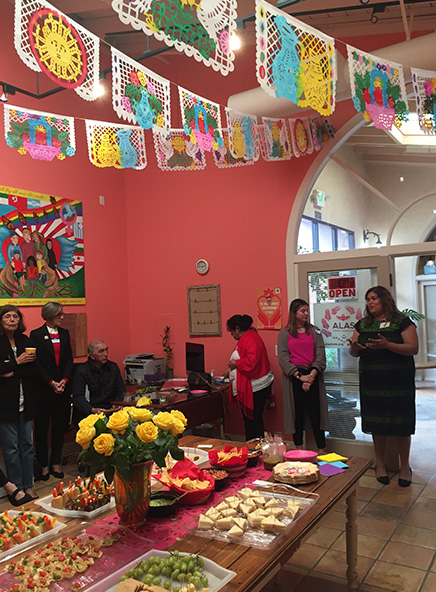 ALAS began with this vision in 2011, serving the San Mateo County coastside community of Spanish speakers and farm workers from its home base in Half Moon Bay. As a Latino-centered organization, the offerings at ALAS weave arts, culture and identity together in support of community well-being. Today, ALAS has expanded to provide comprehensive, wrap-around programs for children, youth, families, farmworkers, asylum seekers, seniors, and the general Coastside community – including bilingual mental health services, art and culture classes, healthy free food, supportive services brought to farm workers, and an entrepreneurship hub.
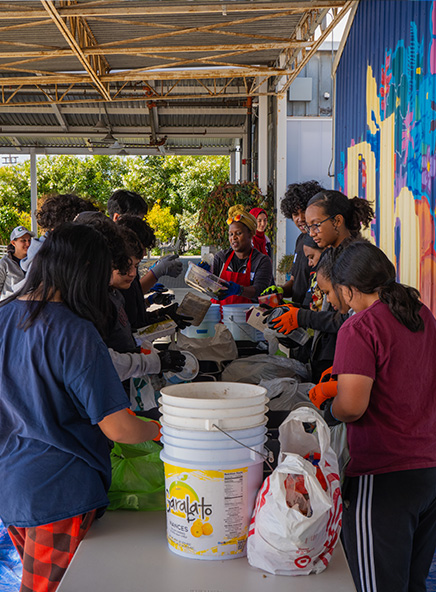 Climate Resilient Communities officially branched off from Acterra as its own organization dedicated to uplifting the Peninsula’s underrepresented communities in September 2020, becoming a fully independent 501(c)(3) in January 2023. Sand Hill Foundation provided early funding in 2021 in the form of a $100,000 matching challenge to stimulate other new donors to support the nascent organization. The match was exceeded three-fold and the staff increased from one to five employees. Today, Sand Hill Foundation provides sustaining unrestricted support and Climate Resilient Communities has a 15-person staff and a budget over $3 million.