North County Collaborative for Mental Health
Wave Divider - NO BANNER PHOTO
North County Collaborative for Mental Health
“The long-term opportunity is to create a North County where families don’t have to be expert system navigators in order to get their child help—that service organizations should know how to find one another, and the systems should do more of that work for the family.”
— Annya Shapiro, Executive Director of YouthPoint Health, the lead agency for the North County Collaborative for Mental Health
Life’s toughest challenges do not exist in isolation. And neither do the solutions.
This idea is central to the innovative work of the North County Collaborative for Mental Health (NCCMH), a partnership between YouthPoint Health (YPH), Daly City Partnership, and Asian American Recovery Services.
“The collaborative’s motto is that young people don’t experience their lives in silos, so we can’t serve them in silos,” says Annya Shapiro, Executive Director of YPH, the lead agency for the nonprofit collaborative. “Young people do better when adults, organizations, schools, and systems around them are connected. And we’ve found that we’re a lot stronger working together.”
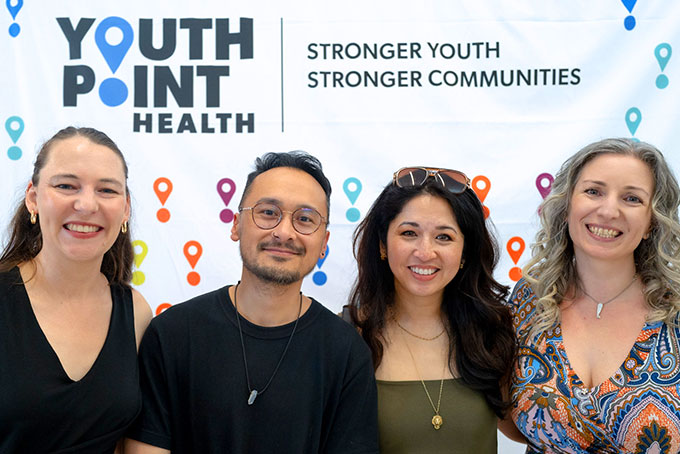 With multi-year funding through Sand Hill Foundation’s Wellness Partnership initiative, NCCMH works to integrate and expand access to mental health support for young people across North San Mateo County, one of the most underserved regions of the county, and Silicon Valley as a whole.
As Annya explains, the partnership arose out of a different way of thinking about how nonprofits serve their community, pivoting from a mindset of “What can my organization provide?” to asking “What does the community need, and how can we collectively respond to the needs of our community?”
The young people and families that NCCMH serves are highly diverse, and many are navigating multiple systems at once—from school, healthcare, and behavioral health to public benefits, the immigration system, and more. Many families are also simultaneously navigating language and cultural barriers, along with the common challenges of housing pressure and economic instability.
“What we hear repeatedly is that families don’t need another disconnected resource—they need support that is accessible, trusted, culturally responsive, and easier to navigate,” Annya shares. “The long-term opportunity is to create a North County where families don’t have to be expert system navigators in order to get their child help—that service organizations should know how to find one another, and the systems should do more of that work for the family.”
NCCMH’s collective approach to building a holistic service ecosystem that meets young people and families where they are not only requires a different mindset from nonprofits—it takes special understanding and investment from funders.
“Sand Hill Foundation has been one of our longest supporters, and they understand that meaningful collaboration takes time and infrastructure.” Annya shares. “It’s one thing to find funding for a specific program but it’s not so easy to secure funding for the relationship building, the coordination, the trust, and shared planning that allows organizations to work differently together. Sand Hill Foundation’s investment in us gave us the opportunity to do that deeper work, and we’ve been able to have greater and more impactful reach within our collective community, especially when it comes to accessing and supporting youth who would otherwise likely fall through the cracks.”
The funder’s role doesn’t need to stop at core programming either. As Annya shares, the collaborative has been strengthened through additional investment in the wellbeing and relationships of the people doing the work—the nonprofit staff members who are often the first to prescribe wellness activities to others, but the last to engage in it themselves.
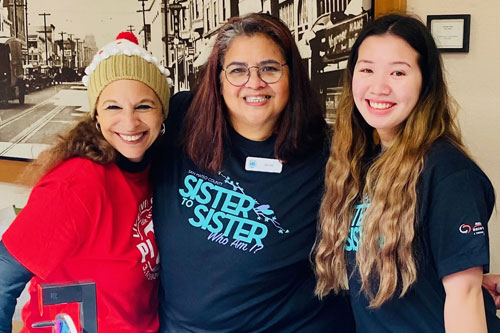
“Sand Hill surprised us by giving us this pot of wellness funds specifically targeted at getting our staff together and supporting them through an activity that takes care of them,” Annya shares. “Every year we do something fun together; we break bread, and this is where the real meaningful relationships occur. And now the kind of collaboration we see is completely different. People constantly think of one another when it’s time to connect their community members with resources—we can just message each other and it happens, because we have that infrastructure built.”
As Annya reflects on the impact of Sand Hill Foundation’s 10+ year investment, she shares a message for fellow funders: “I would like for them to know we need them to invest for the long term and to fund the infrastructure that makes collaboration possible. Communities don’t transform on a one-year grant cycle. The opportunity that we see now is that we’ve already built something that is often the hardest thing to create: the trusted relationships across our organizations. Now we can deepen those relationships and bring youth and family voices more directly into the structure and build something that can last far beyond one single grant.”
The collaborative’s next effort aims to accomplish exactly that: putting the young people of North County at the center of not just service but the design-making and outreach process itself.
“One milestone that I’m particularly excited about is building a strong youth advisory group, across the partner organizations, that gives young people a meaningful, compensated role in shaping priorities,” Annya says. “They’re going to be the ambassadors of spreading the word, ambassadors of mental health, and helping us to increase access across our community. That is really an important evolution—from organizations collaborating on behalf of young people to creating structures where young people themselves guide the collaboration.”